
The History of the Sunderland North Dock: From a coal port to a Marina
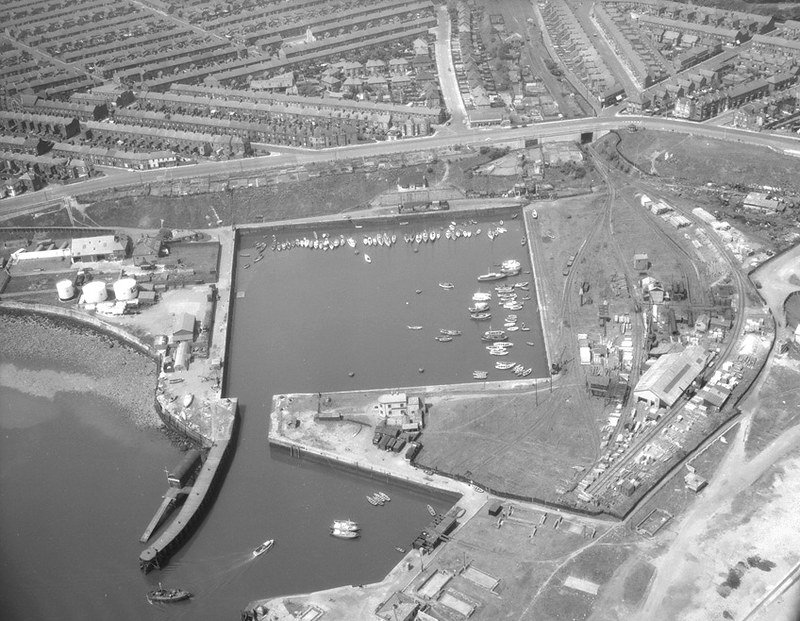
If you go for a walk down Roker, the Sunderland Marina is a beautiful place to pass through. It is enjoyable to gaze upon all the fishing boats, as well as the works of public art along the route as you head from St. Peter’s Campus towards it, and onwards to the beach. But where did this place come from? In particular, the specific box shaped dock that it was built upon? This area was once known as the Sunderland North Dock, and it was once an industrial mini-port, linked by rail which shipped out coal.
The Sunderland North Dock was first built in the early 19th century. The logic behind it was that it would offer a small alternative on the north side of the river to the south side’s port of Sunderland, and therefore improve logistics for smaller shipping. Opened in 1837 by the Wearmouth Dock Company under the leadership of Sir Hedworth Williamson, the size of the opening was just six acres and was built behind the old north pier. Its small size led some to mock it as a “bath tub.”
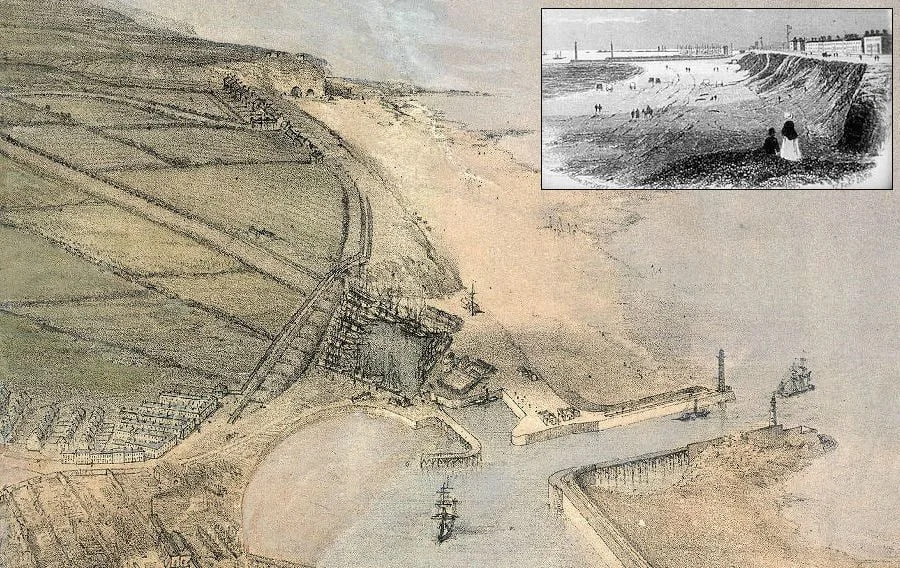
The earliest known painting of the North Dock in the early 19th century, as well as Roker
The North Dock soon after became connected by railway, which was used directly to ship coal to it from the north side collieries, including Monkwearmouth and Hylton, branching off from what would become the main railway line from Sunderland to Newcastle. This railway line closed in the 1970s, ending the North Dock as a shipping port. The former route of the railway can be identified through the green fields behind various houses in Monkwearmouth and Roker, although St. Benet’s RC primary school has now been built over part of it. A former tunnel also used to run under the A183, which no longer exists.
Towards the end of the 20th century, the former North Dock port was redeveloped into the Sunderland Marina, with new housing built around it and public artworks installed. Once somewhere dirty and industrial, the dock was transformed into one of the most beautiful, attractive and scenic areas of the city. There is little doubt that the Marina today is one of its greatest assets.


