


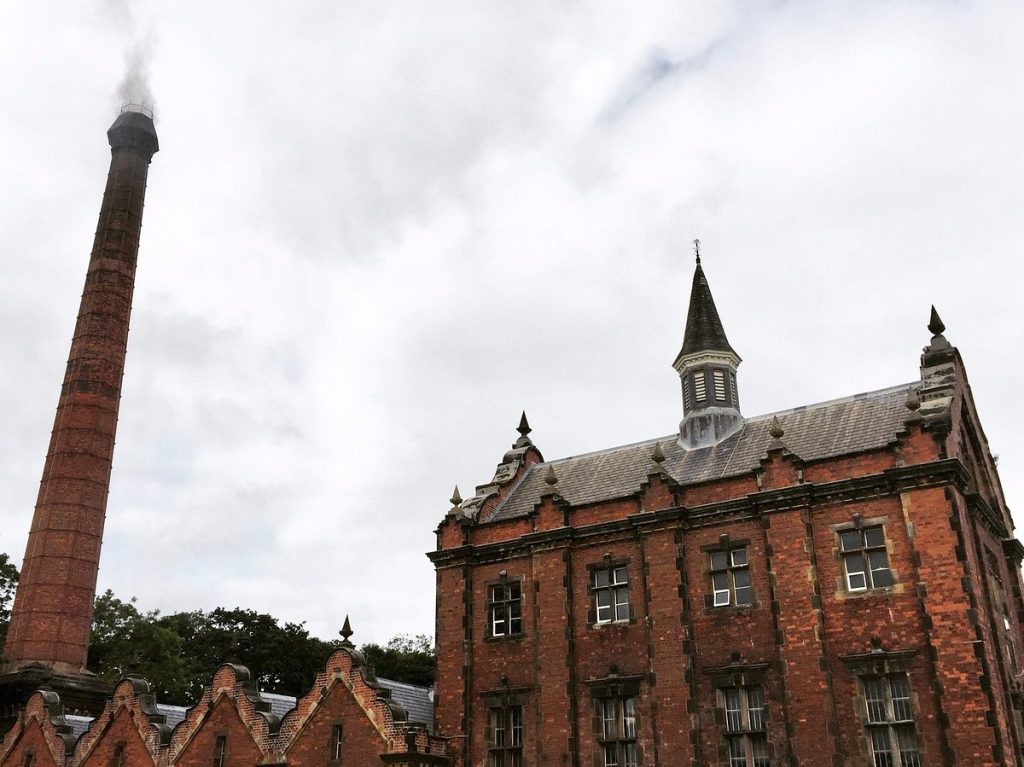
If you are nearby Ryhope, or can see it on a hill from the distance, it is impossible to miss a distinctive chimney poking out into the sky. The new Ryhope-Doxford link also runs past this structure. It is a masterpiece of the village’s, and Sunderland’s history as a whole. Accompanying the chimney is a remarkable classical building decorated in a renaissance Jacobean style, almost appearing akin to a church. This facility, known as the “Ryhope Pumping Station” is a masterpiece of Victorian engineering and a golden element of Sunderland’s heritage. Today, we know it as the “Ryhope engines museum.”
First built in the 1860s, the objective of the Ryhope pumping station was to supply water to the Sunderland area. This had became important as just decades previously, the Cholera epidemic had created a broader awareness of the need for water hygeine. The rapid urbanisation and industrialisation of Sunderland as a whole also mandated a need for a greater Water Supply. This led to the creation of the Sunderland and South Shields Water Company in 1852.
Why of course, was Ryhope chosen as the site? The answer is because anyone familiar with the area will be aware that as shown on Ryhope beach, the geology of the area consists of magnesian limestone, which is soluble to rainwater. This creates a source of fresh water in the ground, and the facility was designed to pump it up and create a supply. Of course, this water was “hard” in its content due to having dissolved limestone in it and was prone to creating limescale in kitchens, kettles and bathrooms.
To pump the water and operate, inside of the building there are two double-acting compound rotative beam engines, powered by steam, three 1908 Lancashire boilers, a blacksmith’s forge, a water wheel and many pumps. The station ceased regular operations in the year 1967, as water infrastructure and machinery became more modernised.
What is unique about the Ryhope Engines Museum is how all of its assets and machinery have been perfectly preserved, representing the best condition models of its kind in Britain. Now a Grade II listed building, the complex is operated by the Ryhope Engines Trust, while the site as a whole continues to be owned by Northumbrian Water.