


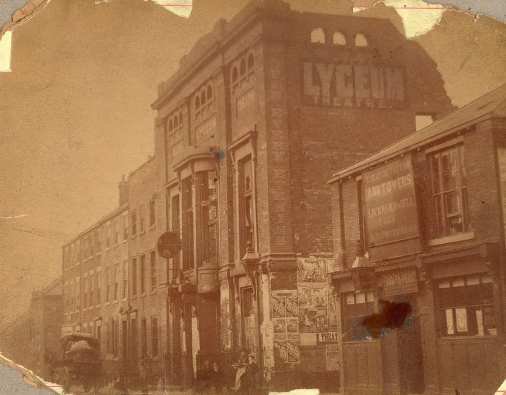
To the east of Sunderland City Centre, just above Sunniside, sits a narrow paved walkway known as Lambton Street. This is where the Cinema now stands, with the Casino and Bowling Alley Standing next to it. But long, long ago this street, with the centre of life on Wearside being towards the East End of the town, used to be a bustling and thriving hub which had another theatre of its own, the Lyceum Theatre.
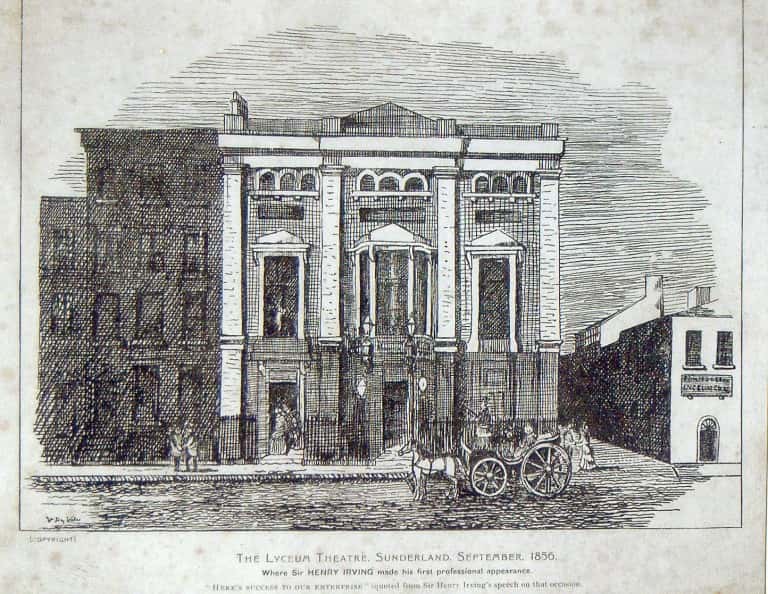
The Lyceum Theatre was first built in the year 1852 as a public hall, which by 1854 had been converted into a Theatre. Here it hosted the legendary Victorian author Charles Dickens, who was pursuing an amateur acting troupe at the time performing Edward Bulwer-Lytton’s Not so Bad as We Seem. Dickens had been staying nearby in the pub which would become Lambton House on High Street East. Despite a small panic at the beginning concerning the state of the building, the performance went ahead and attracted an audience of 1200.

Dickens later recounted the experience in a letter John Forster, which stated: “I am sure I never acted better, but the anxiety of my mind was so intense, and the relief at last so great, that I am half dead to-day, and have not yet been able to eat or drink anything or to stir out of my room. I shall never forget it “
However, the new theatre would suffer setbacks from the word go. In 1855, it suffered a debilitating fire which forced it to be rebuilt, as well as renamed as the “Royal Lyceum Theatre”. The reconstructed venue hosted performances by the famous Victorian actor Henry Irving, which helped propel his career to fame. Irving’s legacy changed the way acting was viewed by British society and he became the first ever to be given a knighthood, a trend which remains to this day.
The Lyceum Theatre though, was not to last, in 1880 it suffered from another fire. This one would destroy the building beyond the point of repair which led to its remains being demolished. After this, the site became a citadel for the Salvation Army. Although the stage was gone, it nonetheless constituted a golden age for Sunderland’s High Street East.