


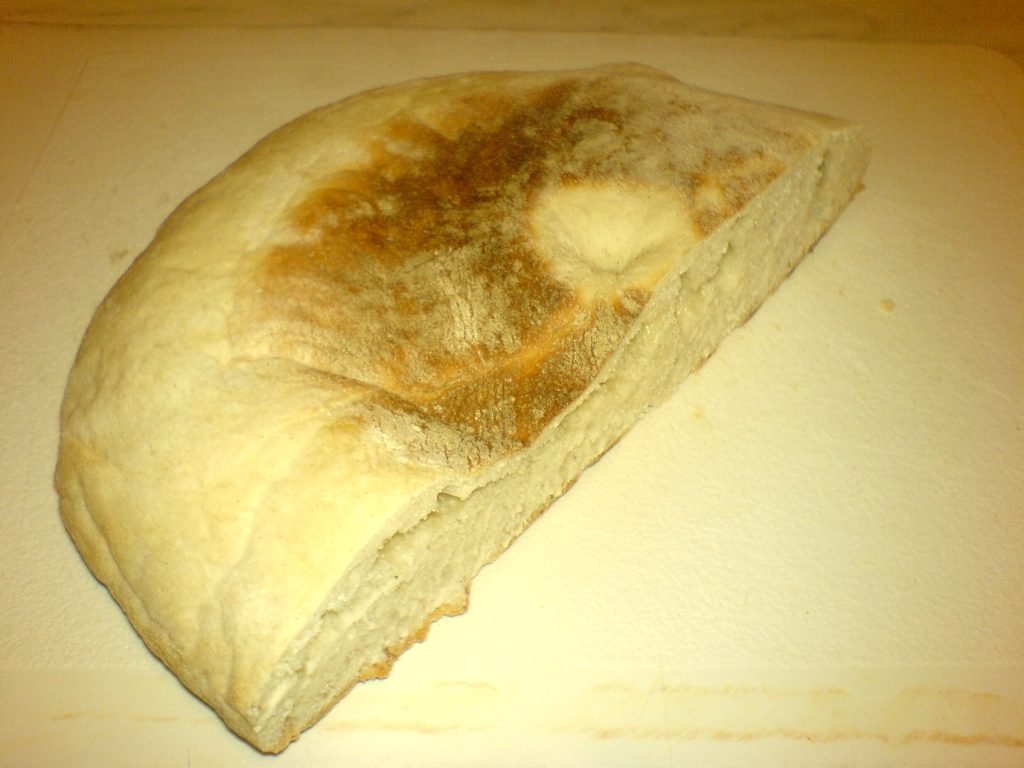
A Stottie cake is a variety of bread which is known for its very thick and crusty taste, usually produced in a round shape. The delicacy emerged in the North East of England, where it has since become an icon of local culture and cuisine.
The name Stottie cake is derived from the Northumbrian dialect of English, which itself has been more heavily influenced by Anglo Saxon Old English than other areas of the country. This gave birth to the unique verb which is “To Stott” which means “To throw.”
The reason it bears this name is because Stottie Cake was purportedly created by throwing together leftover Dough onto the ground to see if it was heavy or not. We should be mindful that while bread is common and taken for granted now, in centuries past it used to be the most important staple and source of food, and in many instances the only food people got.
Because of this, it was customary that when baking no dough should be wasted. So the heaviest dough that was left over was gathered together and placed at the bottom of the oven, which meant it took longer to cook and subsequently raised more, meaning the final product was ultimately more wholesome and economical. This of course gave the unique shape and taste of Stottie cake.
The Stottie Cake recipe however did not come to national attention until 1949, where it was published in the Daily Mirror. Typically, Sottie Cake is eaten with other North East traditional foods, also designed in eras where food was not plentiful and made from leftover ingredient, such as Pease Pudding or panackelty.
Today however it is easy to buy a Stottie cake from your local Greggs bakery, and they make great sandwiches.