
Northern Horizon: Railway Plaza
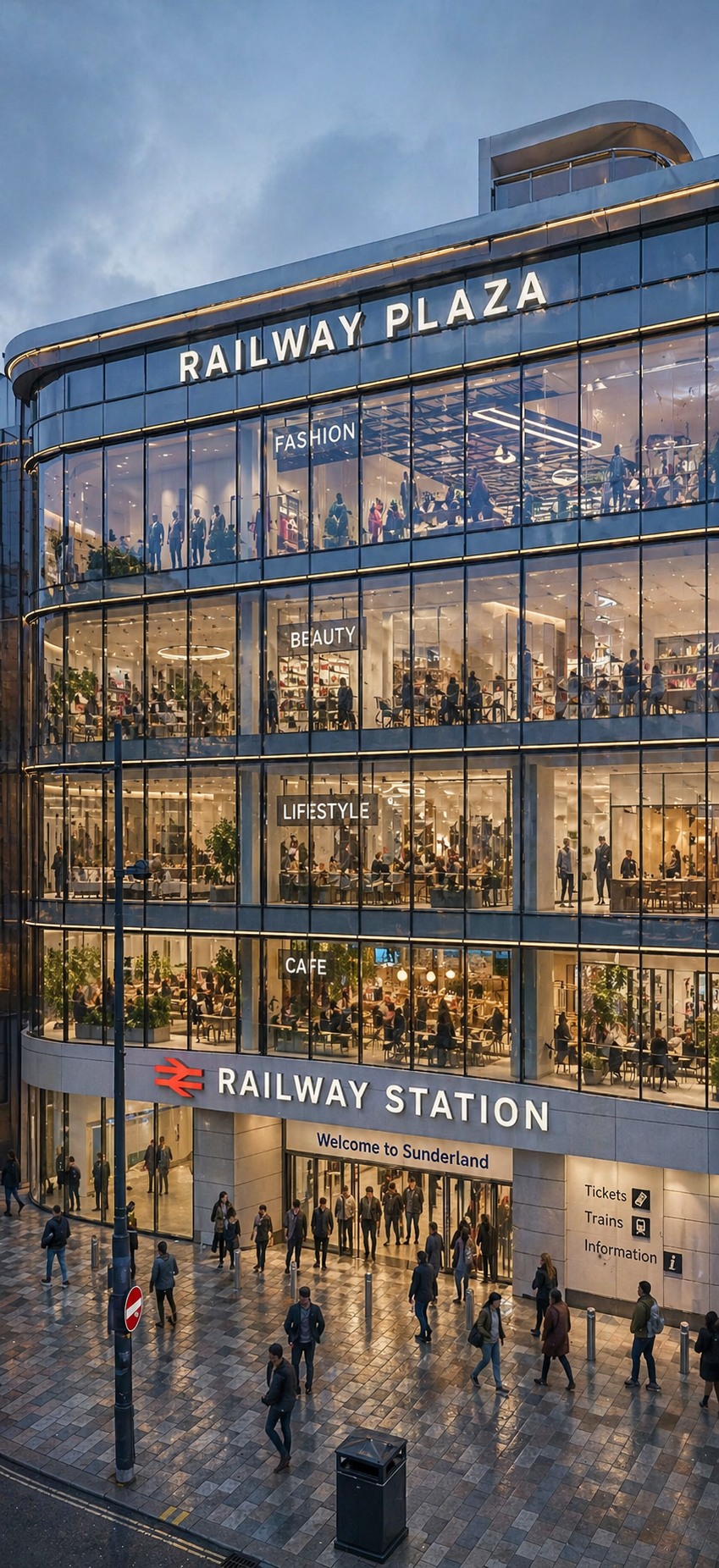
The Railway Plaza is an imagined, future development built in place of the former Littlewoods building in High Street, Sunderland City centre. The proposed facility consists of a new, high street facing northern entrance to Sunderland railway station on the ground floor, coupled with multiple floors of retail outlets, restaurants, cafes and bars up above.
As of present, the “Littlewoods building” once home to a department store of that name, is unused apart from the ground level, which is occupied by Poundland and PepCo. There is another Poundland Store within just a minute’s walk of it in Market Square, showing its presence is not essential. The building, a post-war construction, is deemed ugly and obsolete, with its top floor also having the presence of abestos meaning it can’t be used again.
Likewise, the current northern entrance to the station is deemed inadequate and awkwardly placed. In 2023, Sunderland city council stated there were talks of demolishing this and building a new Northern entrance to the city station. However, news on the development has fallen silent since then and no new proposals were ever released, which is why Northern Horizon is putting this idea on the agenda.
The chief inspiration for this idea is the Japanese-Korean railway station/mall model. These countries fuse many city railway stations with shopping centres, or department stores, which capitalise on transit and footfall in and out of the city. Typically, these malls are modernist with transparent glass facades, light up at night and are an apex of Asian economic progress and urban dynamism.
Although critics will point out that Sunderland is “struggling as it is” to attract new retail units, given the British economy and high street are suffering, and likewise will point out that the south station entrance as it is unable to attract retail units, there is also evidence to the contrary. First of all, Sunderland has not struggled in attracting new restaurants, cafes and bars, but has in fact thrived. In instances where new premium tier space for places to eat and drink were created, the city did not struggle at all to attract vendors, including high-end brands such as The Botanist. This model was established in Keel Square and Sheepfolds and is worth paying attention to, neither have failed.
Secondly, asides from the national high street struggle over retail, the city centre is held back by a “negative cycle” whereby “people assume there is nothing, so they don’t come, and thus there is nothing.” The North East has some major shopping venues, such as Eldon Square and the MetroCentre, those with defeatest mindsets should be strategising how to absorb footfall from these locations rather than arriving at the conclusion that Sunderland is simply unable to attract retail full stop.
Instead, the city has a lot of potential and effort must be made to integrate and centralise the city centre’s pull. We have a noted problem with peripheral regions, such as Washington, where Sunderland identity and belonging is weak and there is an alignment to “Newcastle.” Given the expansion of the Metro circuit into Washington, even if it adds a Sunderland link, may make this problem worse, effort must be made to pull people the other way.
Build it and they will come.
