The Meadow well Riots, how anti-police sentiment sent a Tyneside suburb up in flames
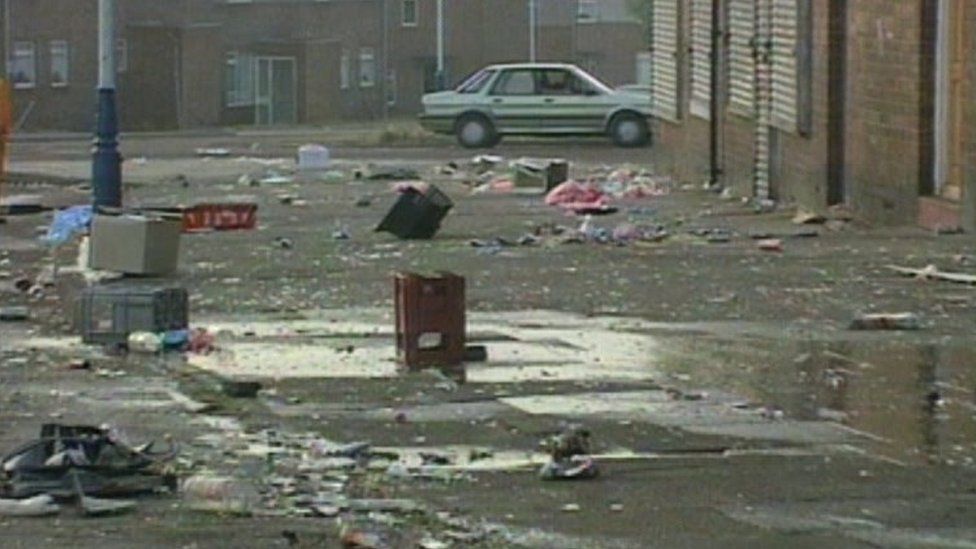
The 1980s and early 1990s were a grim period for the North East of England. The Margaret Thatcher government had effectively decimated its entire economic foundation by destroying its mining and maritime industries, accumulating in mass unemployment which led to the rise of large scale social disorder and crime.
An entire generation of young men, born in the 1960s and 70s, entered adulthood with effectively nothing, facing a world which they didn’t have a place in and a mass outpouring of anger against authority. This frustration led to delinquency and violence. Nowhere did the impact of all this hit harder than the council estate of Meadow well located in North Shields, where one event sent the estate to the brink.
Because of the Conservative government of that time, the impact of the Miner’s Strike and national outrage over the Hillsborough disaster in 1989, working class trust and respect for police was at an all time low, and on September 6th 1991, two young men, Dale Robson and Colin Atkins, were pursued by Northumbria Police after they were alleged to have stolen a car.
The high-speed chase led to their deaths and the local community blamed the police, leading to an explosion of innate frustration and anger. As the story surfaced the public turned to large scale rioting, including destroying a power station, ransacking any building that came within sight, and setting cars on fire. As was typical of that era, this also involved targeted racism and attacks at South Asian shopkeepers.
When Fire Brigades arrived to put out the fires caused, they were pelted with bricks, while hundeds of youths battled an army of police. The riots soon spread from Meadow well to suburbs in Newcastle, with Benwell also being reduced to ruin. The government, led by John Major, was soon criticised for failing to respond adequately and was accused of giving them a free hand.
However, the legacy of the riots were that it ultimately spearheaded the community revival of the estate, which over 30 years later, is arguably a very different place now. Yet, the riots live on as a reminder of the trauma, anger and upheaval the North East ultimately faced in the midst of industrial decline.