The history of the Marsden Lime Kilns, a remnant of local heritage
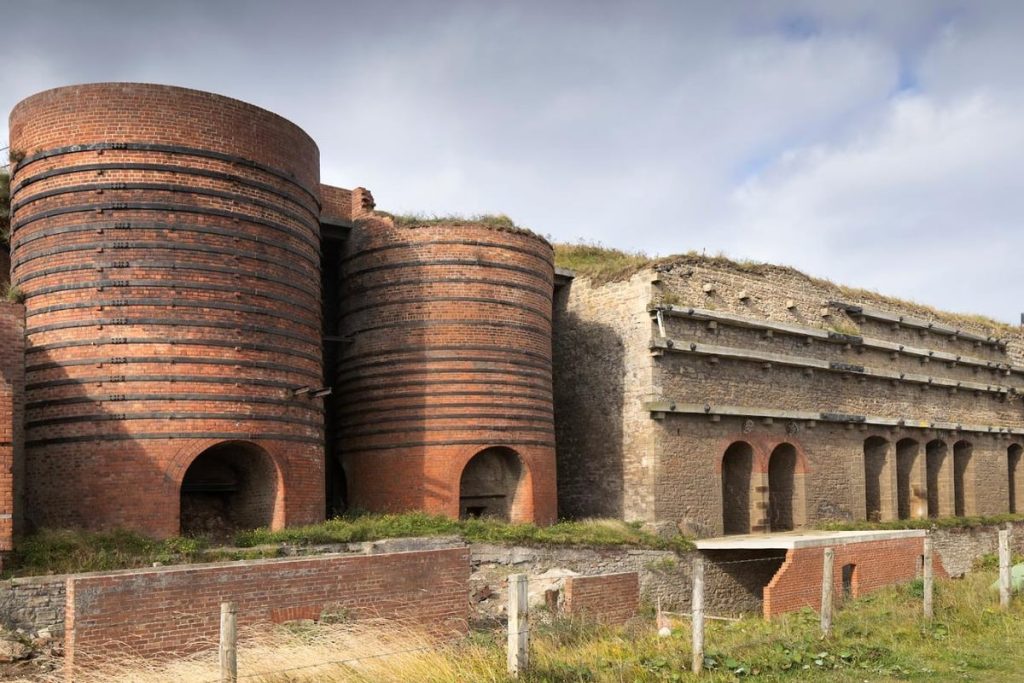
The coast of the North East of England, south of the River Tyne, is compromised of a material known as Magnesian Limestone. Formed in the Permian era, this limestone constitutes a significant portion of the landscape around Sunderland and South Tyneside.
The River Wear carved its way through the limestone to create a valley, while the admirable beaches of Marsden, Ryhope and Seaham have attained their distinctive character through the coastal erosion of this very rock.
Not surprisingly, a lime production industry soon emerged in the region, with one of its many quarries being Marsden, and with it, the Marsden Lime Kilns, where mined limestone was heated to create quicklime (calcium oxide), used in the creation of many materials. As you drive up the coastal road towards South Shields, you see these former lime kilns sticking out of the cliffs, with their distinctive red colour, as if they were an ancient ruin of sorts.
The Marden Lime Kilns were first opened in the year 1870, born out of an extremely convenient location which bordered the Marsden Quarry, while also having a plentiful source of coal from the nearby Whitburn Colliery, as well as an immediate link to the port of the River Tyne northwards. A small railway was constructed with it providing a link to Shields, known as the Marsden Rattler. Working life in the Lime Kilns was dangerous, which often brought risk of chemical burns to its employees.
With the Lime Kilns, the town of Marsden rapidly expanded and soon became home to 700 people within four years of opening, which coincided with the colliery. In the 1890s, the facility was expanded, adding the two cylinders now visible to its south side. They would remain in operation until 1968, with the closure of the colliery, as well as the impact of coastal erosion, placing the village’s existence in jeopardy. The remnants of the Lime Kilns would later be designated as a monument by Historic England.
Despite this, questions remain about the future of the former Marsden Lime Kilns. It was recently proposed by South Tyneside councillor Gladys Hobson that the Kilns should be demolished with a new road built in their place, as coastal erosion calls into question the future of the A138 road, calling them an “eyesore.” Needless to say, her comments were widely condemned and criticised, with few, if anyone agreeing.
Of course, the Kilns are not going anywhere. Irrespective of the debate over their attractiveness, they remain a critical part of the area’s history and heritage, the livelihood of many people’s families, and an icon of its identity.